Platform
RBVM: Risk Based vulnerability Management
Patrowl applies a Risk-Based Vulnerability Management (RBVM) approach that prioritizes vulnerabilities based on their likelihood of exploitation, business criticality, and potential impact on the organization.
Each vulnerability is validated and enriched with threat intelligence, enabling security teams to focus on vulnerabilities that are truly exploitable and high-impact.
Each vulnerability is contextualized according to four key factors:
Asset criticality: strategic importance for your operations (asset type, exposed service, remediation status);
Threat activity: whether the vulnerability is actively exploited (available PoC, vendor confirmation, observed attacks);
Exposure: system accessible from the Internet or confined internally (detected URL, exposed interface, visibility level);
Business impact: potential consequences in case of exploitation (business risk, remediation recommendations, SOC indicators).
Trusted by 100+ organizations, including major CAC 40 companies
A Solution Built by Pentesters and Cybersecurity Experts
Why traditional vulnerability management isn’t enough?
Many organizations still rely on the common vulnerability scoring system (CVSS) — a global standard that gives each issue a score between 0 and 10.
CVSS helps rate technical severity, but it doesn’t tell the full story. It ignores asset criticality, exposure, and the real business impact of a vulnerability.
What CVSS misses?
A CVSS score shows how serious a weakness is, but not how likely attackers can use it or how much damage it could cause. For example, a CVSS 9.8 on a test server may look dangerous, but a CVSS 7.0 on a payment system could be far more critical. Traditional tools treat both equally.
Beyond CVSS: incomplete context
Databases like NVD and EUVD collect and publish vulnerability data, but they often lag behind real-world activity.
Sources such as KEV, EPSS, and LEV add valuable context, like whether a vulnerability is being actively exploited, yet each covers only part of the picture.
The real consequence
As a result, security teams spend hours fixing low-impact security issues, while high-risk vulnerabilities on critical assets remain open to emerging threats. Time and effort are wasted where the risk is lowest and attackers exploit where defenses are weakest.
Real-world results with Patrow
750K+ automated scans
every month with our in-house technology
3× faster remediation
through qualified and contextualized vulnerabilities
+40% more
external attack surface discovered
0 false positives
on Patrowl-validated vulnerabilities
How Patrowl RBVM turns visibility into action?
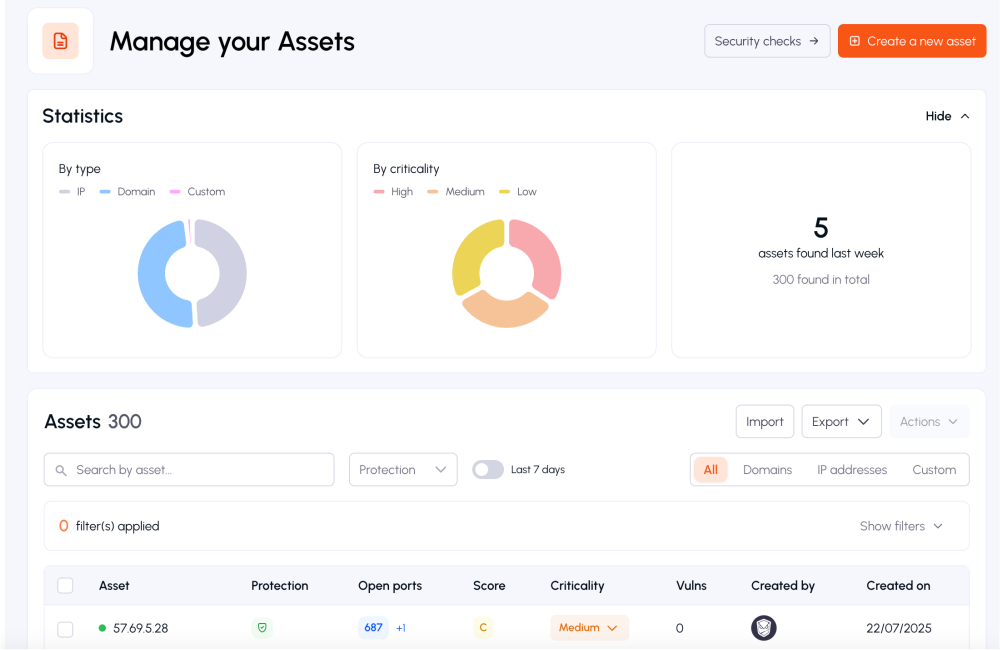
Find your internet exposure
You can’t protect what you don’t know.
Patrowl continuously scans your perimeter to find Internet-facing systems and Shadow IT, which are often responsible for up to half of all data leaks and breaches.
You get complete visibility into:
Domains, certificates, and web applications
Public-facing services and forgotten systems
Setup mistakes and weak configurations
Domain reputation and SSL/TLS health
This continuous visibility ensures your critical assets are always identified and monitored.
Test for known and unknown weaknesses
Patrowl performs automated pentesting constantly — not just once a year.
It detects:
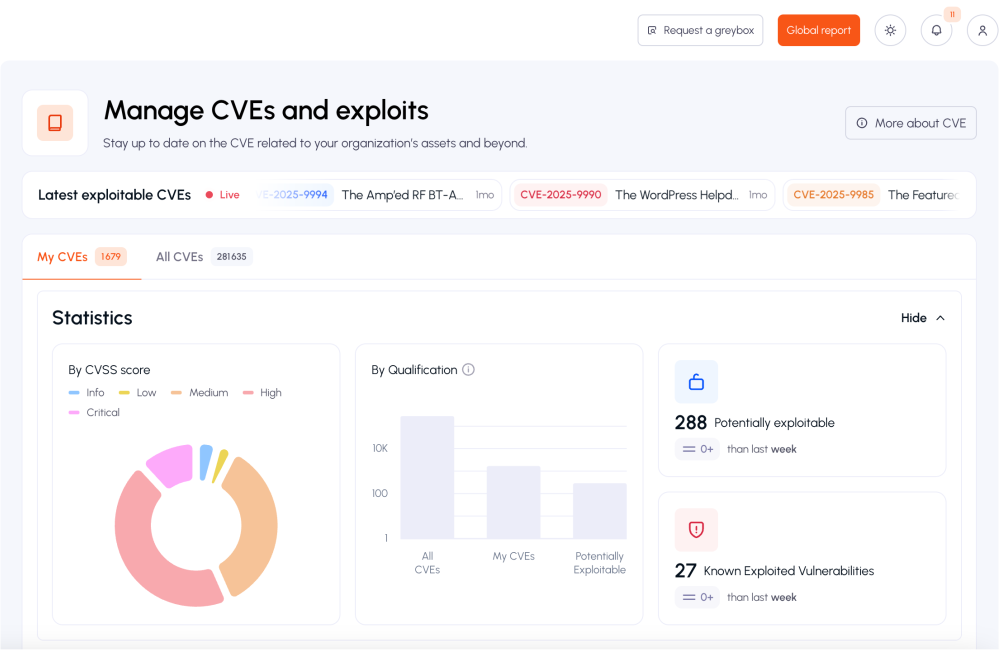
Known vulnerabilities (CVE, CWE, CPE)
Unknown or unlisted weaknesses missed by traditional scanners
Common issues based on OWASP, PTES, and OSSTMM standards
You get the depth and precision of a manual pentest, but at scale.
All results appear in your Patrowl dashboard, giving you a single, reliable view of your vulnerabilities and risks.
Rank and fix what matters most
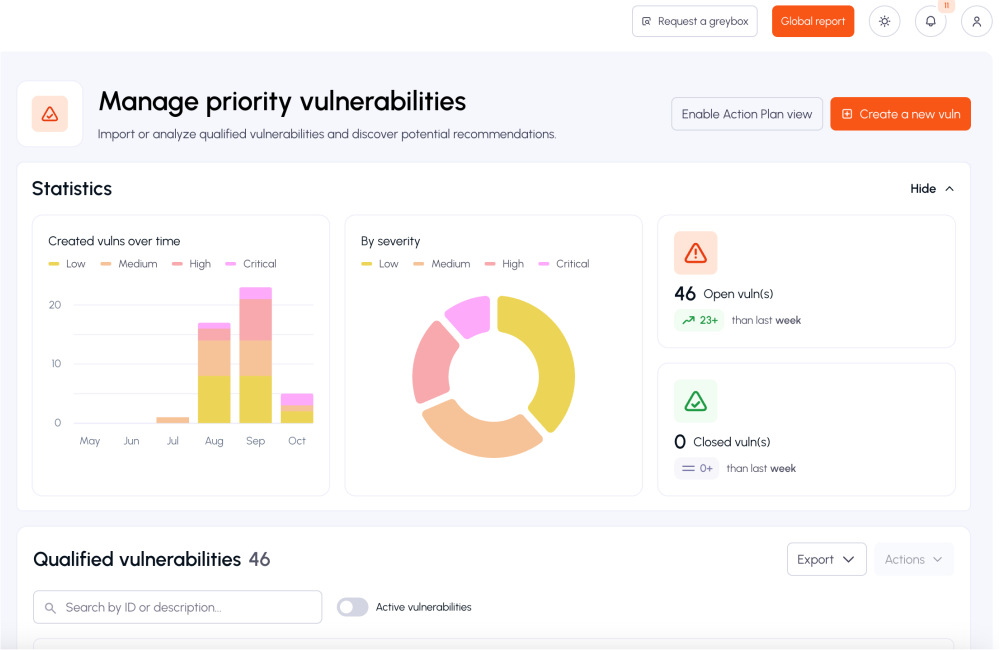
Patrowl automatically filters false positives and ranks findings using a contextual risk score that blends:
Technical severity (CVSS)
Threat data (KEV, EPSS)
Asset criticality and exposure level
Business impact
This makes prioritizing vulnerabilities based on real risk simple and actionable.
Your team focuses on high risk vulnerabilities that threaten critical assets, instead of wasting time on low-impact alerts.
Patrowl also connects seamlessly with your ITSM and CMDB tools — including Jira, ServiceNow, and GLPI — so each task, status, and fix is tracked and aligned with your internal process.
See your risks and stay ahead of new threats
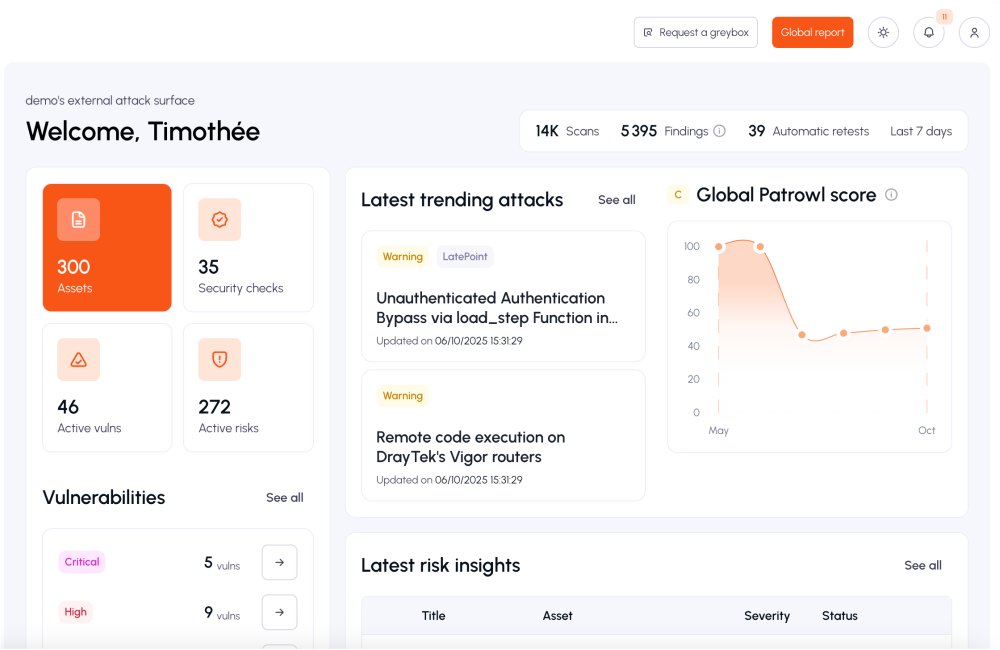
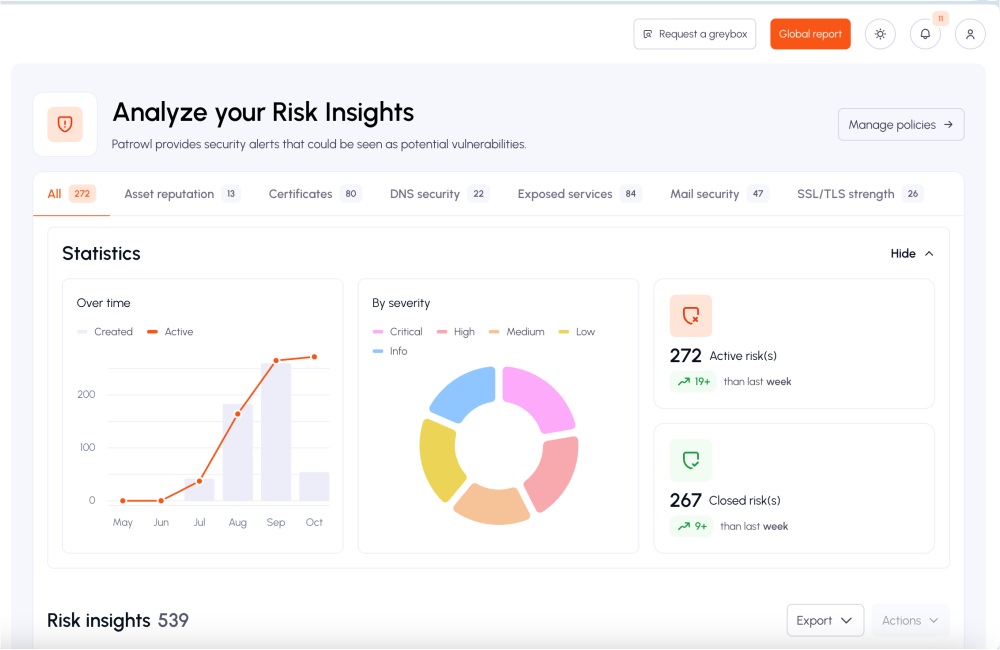
Patrowl gives you clear, visual risk insights that show where you’re most exposed and how to reduce risk fast.
It monitors:
SSL/TLS configuration and encryption strength
DNS health and domain reputation
Email security (SPF, DKIM, DMARC)
Exposed services, APIs, and ports
Certificates, credentials, and asset hygiene
It runs thousands of security checks (CWE, OWASP, CPE, CVE) across 30+ categories — from weak passwords and code flaws to IoT and network setup errors.
You can generate 1-click reports (PDF, CSV, JSON) and get instant alerts via email, Slack, Teams, or ticketing tools when emerging threats appear.
Patrowl supports multi-tenant organizations and scales easily for enterprises

What our clients say
“Patrowl has transformed the way we approach vulnerability management.We now receive high-quality, verified results continuously — and our engineers can immediately act on them.”
“Since 2017, Heetch has relied on Patrowl to strengthen monitoring across all public assets.After a successful PoC, the solution was deployed in just two days.”
“With Patrowl, we not only automated our process but also gained clear visibility into our security posture.We’ve significantly reduced our response time to threats.”
Our Partners
Patrowl: Trusted, Recognized, Sovereign Cybersecurity
100% French solution – France Cyber Security certified
Startup Grand Prize – Forum InCyber Europe (FIC) 2025
Innovation Award – Assises de la Cybersécurité 2022 & 2023
Featured in Wavestone’s FR & UK Cyber Radar
100% customer renewal rate in 2024
Our Offers
Anticipate attacks before they happen. Move from one-off testing to continuous security monitoring.
Advanced EASM
Take control of your attack surface.
Real-time, continuous monitoring of all exposed assets (domains, certificates, applications, emails, credentials)
Immediate detection of Shadow IT, misconfigured services, and forgotten assets
Risk-based prioritization of exposures, using active threat intelligence (CISA KEV)
Rapid reduction of your attack surface through automated, guided remediation
Full visibility into what’s publicly accessible — no blind spots, no surprises
Continuous Pentest
Automate your pentests, identify real vulnerabilities.
Real-time, dynamic mapping of your external attack surface
Automated pentests validated by certified experts — zero false positives
Continuous testing of applications, exposed services, ports, protocols, and subdomains
Prioritization of vulnerabilities based on business impact and exploitability
Expert remediation reports with clear, actionable fixes for fast response
FAQ
How does Patrowl calculate the risk score?
Patrowl uses CVSS, live threat intelligence (KEV, EPSS), asset criticality, and business impact to create a contextual risk score. This helps teams prioritize vulnerabilities based on risk, not just severity.
What integrations does Patrowl support?
Patrowl connects with ITSM and CMDB tools like Jira, ServiceNow, and GLPI, RBVM platforms such as Hackuity, Nucleus, and VOC, leak detection tools like CyberAngel, and SIEM systems including Splunk, ELK, and your SOC.
How does Patrowl manage new and emerging threats?
When a new exploit or zero-day appears, Patrowl instantly updates risk scores and sends alerts. Your teams can focus on the most urgent vulnerabilities first and react before attackers do.
What kind of reporting and dashboards are available?
Generate 1-click reports with CVE, CVSS, and risk details, plus resolution status and progress. Dashboards show trends, exposure by asset criticality, and performance metrics like mean time to fix — ideal for audits and executives.