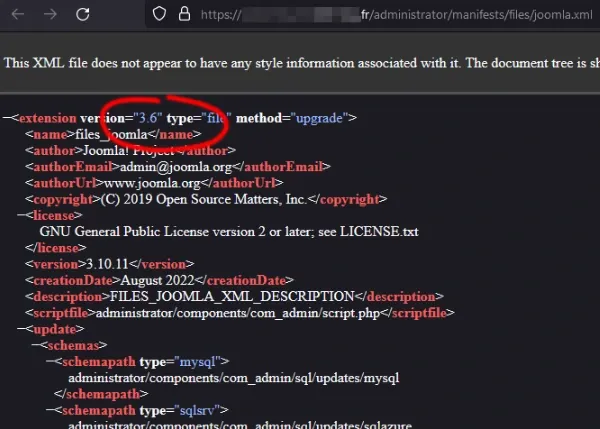
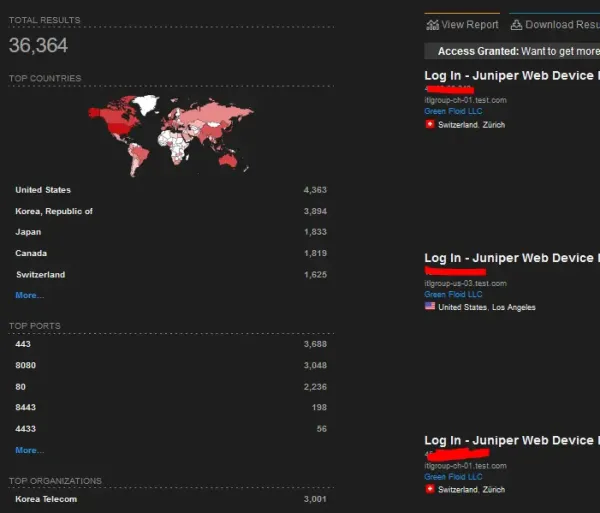
If you have remote access (VPN) based on the Ivanti Connect Secure VPN solution (formerly Pulse Secure and Juniper Secure Access), I strongly recommend checking the version of your equipment, updating it, and investigating if you haven't been compromised.
On January 10th, the vendor issued an advisory regarding 2 vulnerabilities that, combined, allow taking control of your remote access gateways:
- CVE-2023-46805, authentication bypass
- CVE-2024-21887, command injection on the VPN web portal with administrator rights
The bulletin : https://forums.ivanti.com/s/article/CVE-2023-46805-Authentication-Bypass-CVE-2024-21887-Command-Injection-for-Ivanti-Connect-Secure-and-Ivanti-Policy-Secure-Gateways
The vulnerabilities have been detected as actively exploited, so it is VERY strongly recommended to investigate. In the article below, you will find some indicators (IoCs) to identify a potential compromise:
https://www.volexity.com/blog/2024/01/10/active-exploitation-of-two-zero-day-vulnerabilities-in-ivanti-connect-secure-vpn/
They also provide Yara detection rules and IoCs in CSV format.
Interestingly, Circl published an opinion on the subject with their thoughts on these devices:
It’s almost heartwarming to see our supplier finally roll out security patches, albeit at a pace that would embarrass a snail. In the meantime, while we wait with bated breath, this could be an excellent moment to ponder whether our current VPN provider is a champion of cybersecurity or just a champion of testing our patience.https://circl.lu/pub/tr-78/
They publicly state what everyone has been saying for years. These devices have changed little since Juniper (except for the product name). They are an assembly (among other things) of insecure open-source technologies (or poorly assembled 😉), with web interfaces far from standard, lots of historical CGI files...
Unfortunately, all of this is assembled without modern security (sandboxing, jails, containerization, SELinux...). To their credit, all these features come from customer requests that they had to add (download the VPN client, have a purely web VPN without client software to install, strong multi-factor authentication...)
As soon as someone looks into it, it ends with vulnerabilities: https://thinkloveshare.com/hacking/failed02_pulse_secure_vpn_guacamole_websocket_hooking/ and https://www.youtube.com/watch?v=0ayQl2oB1tA .
Since the patch is not yet available (scheduled for January 22), there is a workaround to apply if needed: https://forums.ivanti.com/s/article/KB-CVE-2023-46805-Authentication-Bypass-CVE-2024-21887-Command-Injection-for-Ivanti-Connect-Secure-and-Ivanti-Policy-Secure-Gateways.
Circl also recommends disabling the remote access service 😂.